
No Centre County 72-Hour Feed
Centre County exposes no separate official page listing all county-jail releases from the past three days. Its official Inmate Listing page sends users to VINE. It does not display a county roster, a 72-hour tab, release cards, photographs, or a downloadable archive. No county-defined cadence, retention span, or list fields are stated there.
That absence calls for a different method. A three-day inquiry must be built around a known person and an approximate period. VINE can provide a fast status event for a participating agency. Centre County Correctional Facility can address the custody end. The UJS docket can show the bail, sentence, dismissal, or order that may explain it. A Centre County record request provides the durable fallback when those sources leave the event unclear.
Check Centre County 72-Hour Releases
Start with identifiers, not with a list assembled by comparing names. Use the full name, middle name or aliases, age or date of birth, and an offender or booking number when known. A common name or photograph alone is too weak. Record the dates covered by the inquiry and the time each source was checked.
- Open VINELink through Centre County's official VINE instructions. Select Pennsylvania, choose Find an Offender, and search the exact name or offender ID.
- Open More Info. Match the identity and facility, then distinguish a release event from movement, transfer, escape, or another status.
- Call Centre County Correctional Facility at 814-355-6794. Use Option 0 for whether a named person is presently jailed and Option 1 for Inmate Records.
- Check the UJS public case portal for Centre County court entries during the same three-day period.
- Request the existing booking and release record when the exact date, time, disposition code, or receiving authority is still needed.
Ask whether Centre County custody ended and whether the record says community release or transfer. “Is the person there?” answers only present custody. A transfer to PADOC, another county, federal custody, or immigration custody also removes the person from the Centre County facility without putting that person in the community.
For a tighter same-day inquiry, use the Centre County 24-hour release process. The three-day approach is better when the event may have crossed midnight or a busy nonbusiness period.
What Centre County 72-Hour Records Show
An official Centre County 72-hour list shows no fields because no such list is exposed. Instead, request the existing Centre County facility record for the named booking. The precise local form is not displayed online, so the request should seek actual fields without claiming that every item is held or open. Asking for a narrow electronic copy reduces ambiguity.
| Field to request | Why it matters in a three-day review |
|---|---|
| Full name and booking number | Separates the identified stay from another person or an earlier commitment. |
| Admission date and time | Sets the start of the custody period being reviewed. |
| Release date and time | Places the CCCF custody end within or outside the selected 72-hour span. |
| Release or disposition code | May identify bond, time served, parole, dismissal, court order, or transfer. |
| Holding authority or case | Links the event to the agency or docket that controlled detention. |
| Destination or receiving agency | Helps separate community release from a handoff to another authority. |
A booking photograph can be requested separately, allowing the county to decide that record apart from the release sheet. If a field is withheld, read the cited reason and appeal directions. The records route concerns existing documents; it does not require staff to create a complete three-day list that the county does not already maintain.
Note: A court docket may explain the release authority, while the CCCF record is the better source for the physical custody-end time.
Centre County Weekend Release Timing
A three-day window is useful around weekends and holidays because it reaches farther back than a same-day check. Still, Centre County publishes no fixed release schedule and no promise that a status update will appear within a set number of hours. The Centre County facility FAQ says processing varies with concurrent arrests and releases and with cooperation. It describes evenings, weekends, and holidays as traditionally busiest.
A bail order entered on one day can be carried out later, and another hold may remain. A VINE status can also change after the underlying facility action. Keep a short timeline with the court event, VINE event, jail confirmation, and record-request result. The sources need not share one timestamp because each records a different step.
The three-day span does not solve every delay. If the Centre County facility still shows custody, do not override that status because a docket reports bail. Contact both sources. If VINE shows movement, follow the receiving facility instead of placing the event among community releases.
Centre County Release Listing Quirk
The county's most distinctive data issue is the title of its listing page. “Inmate Listing” sounds like a local database, yet the page contains only directions for VINE. It has no locally displayed names, no 72-hour archive, no release-field key, and no county photo policy. This gap makes an overnight disappearance especially weak evidence.
VINE is valuable, but it is a status and notification system rather than a public file of every person released in a selected period. VINELink also offers an app and alerts, while no county correctional app with a recent-release list was found on the reviewed official pages. Search one person, verify the facility, and inspect the event. A positive event can support a conclusion about that custody source. A missing result remains inconclusive. Names, aliases, data lag, full discharge, and changes in participating records can all affect what appears.
Current-custody results also serve a different purpose. A person still shown at CCCF has not been confirmed as released from the jail. A person who moved to an SCI remains in custody under PADOC. The correct label follows the event: release, parole, discharge, transfer, or another recorded outcome.
Request Centre County Release Records
The Centre County NextRequest portal is the formal channel for a narrow existing record. Identify the person, the approximate Centre County booking period, and a booking number if known. Ask for an electronic copy of the booking or release entry and its existing fields for the date and time custody ended, release or disposition type, and receiving agency or destination. Avoid unnecessary sensitive facts in a public submission.
The county records portal shown below is the official online channel used for that request:
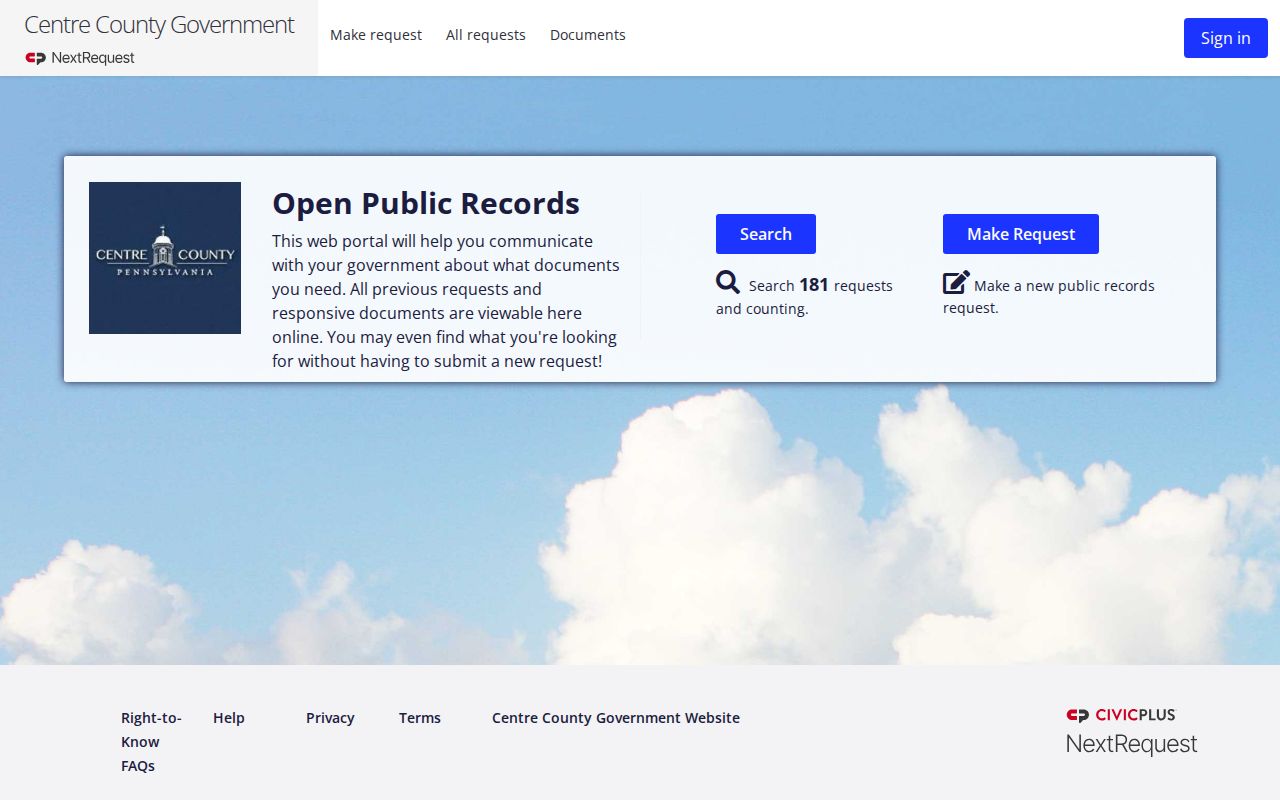
The portal turns a changing three-day status question into a request for the county's existing custody transaction.
Appeal Centre County Release Denials
If the response says no record exists, verify that Centre County was the holding agency. A local arrest may not have led to a Centre County commitment, while a state transfer requires a separate PADOC record. If the county denies access, review the cited exemption and appeal instructions. The county's open-records page states a 15-business-day appeal window to the Office of Open Records, although judicial records may follow a different route.
The official open-records instructions provide the county's public starting point:
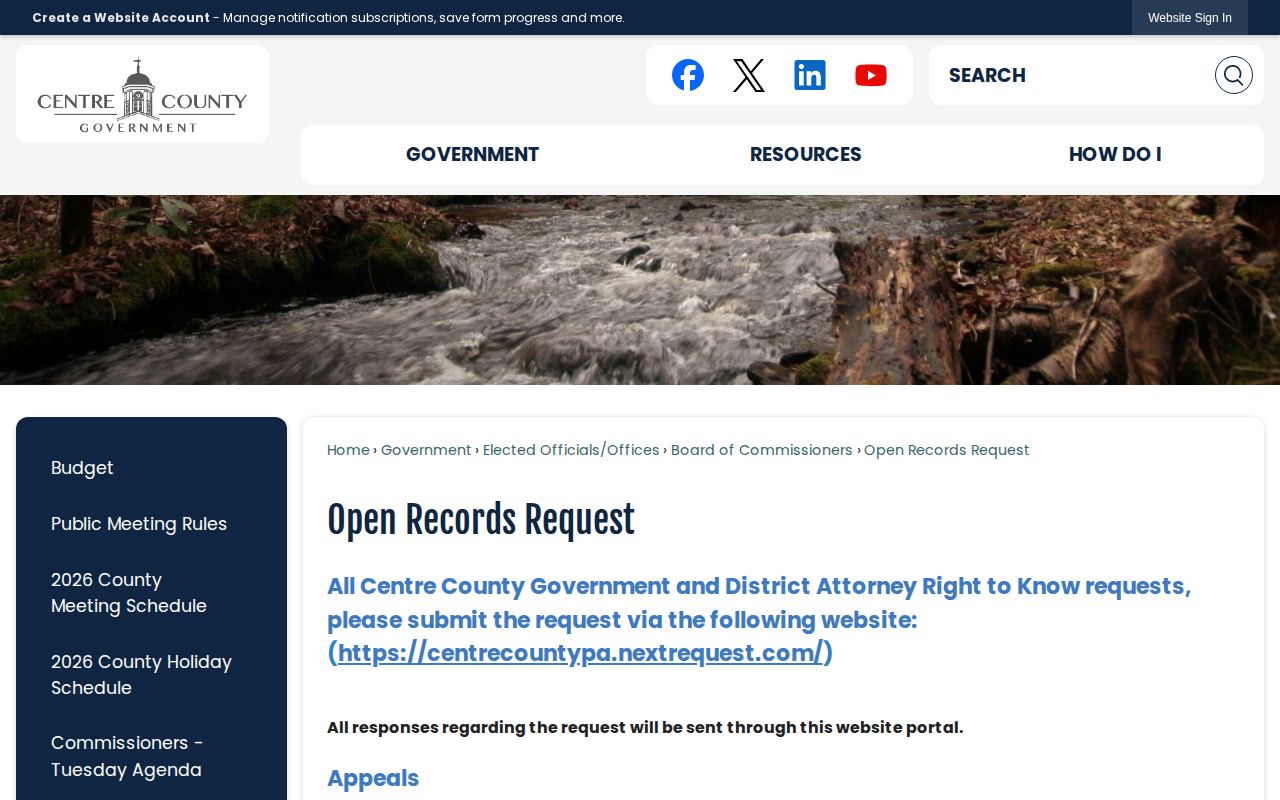
Use those instructions for the administrative record, while the Clerk of Courts remains the route for public Common Pleas case records.
Avoid False Centre Release Clues
One local 72-hour reference has nothing to do with a recent-release list. The CCCF FAQ says remaining account funds may be provided by debit card at release and that funds should be removed within 72 hours before a daily charge begins. That deadline concerns money left on the release card. It is not list retention, a public search window, or proof that county release data stays online for three days. Work release can create another false clue. Centre County requires court eligibility and Warden approval, and participants leave only for authorized activity before returning. They remain inmates. Seeing someone away from the facility does not establish discharge.
The county work-release page documents program eligibility rather than a release feed:
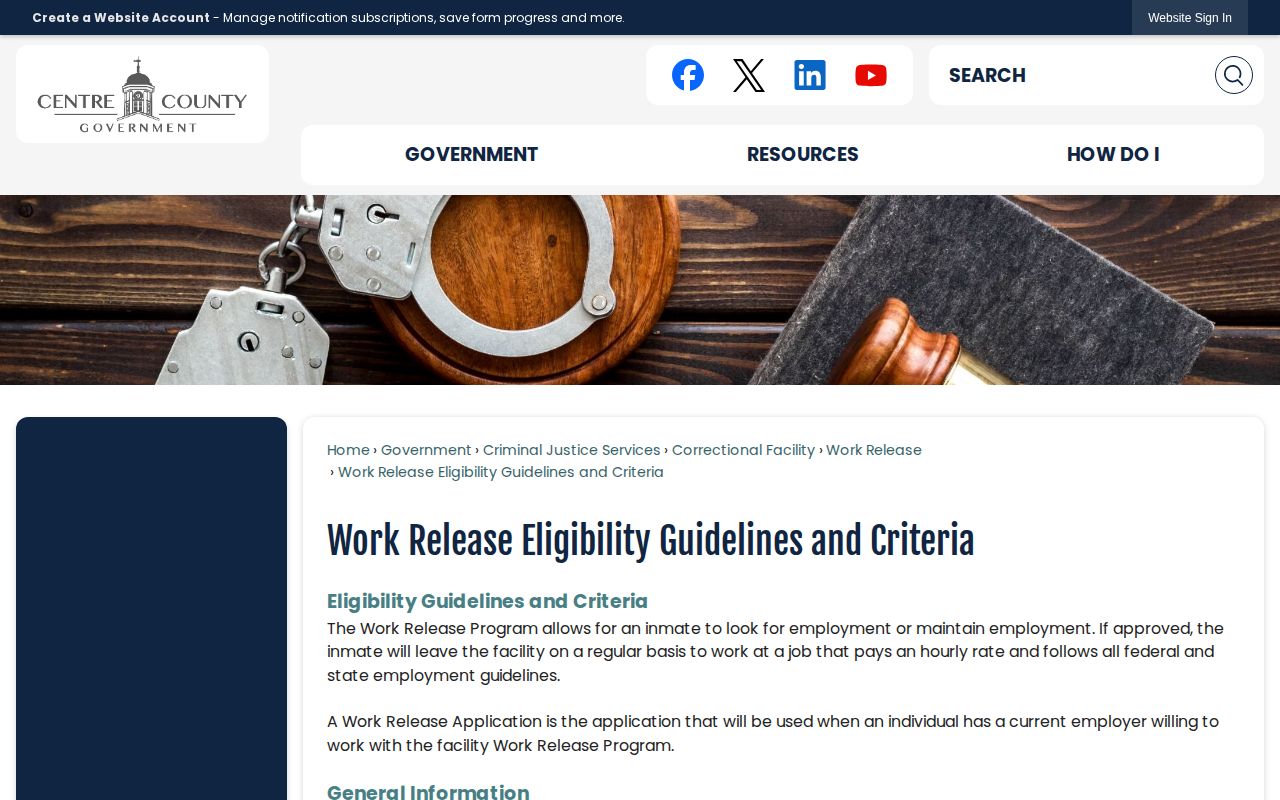
The distinction keeps temporary authorized absence out of a list meant to describe custody that truly ended.
Note: Escape, furlough, work release, and transfer must not be reported as routine community releases from Centre County custody.